
Superstition, Prayer, and Absent Providence
The Painted BirdThis thread follows the boy’s changing attempts to explain suffering through folk magic, Christian prayer, and finally a secular political doctrine.
increasing Bearing strength in each event
 decreasing
Bearing strength in each eventdecreasingMarta’s Living World
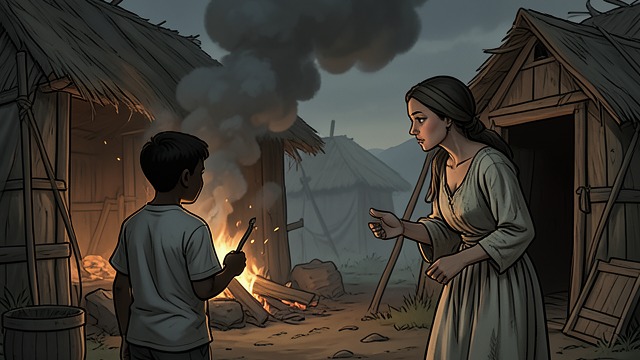
The World as Enchantment
Ordinary Events Made Ominous
In Marta’s hut, illness, death, animals, and weather are woven into a world of signs and invisible forces. Her habits and warnings make daily life seem governed by powers that must be appeased or outwitted.
The boy encounters these beliefs as a child who has lost his familiar home and cannot reach his parents. Supernatural explanations offer a pattern for events that would otherwise feel arbitrary and terrifying.
Meaning Without Protection
Marta tells the boy that a soul can shed its body like a snake sheds its skin. When she dies in the hut fire, he tries to interpret the smoke as a possible escape or transformation.
His explanation cannot reverse her death. Folk belief gives him images with which to think, but it does not give him the power to save the people or animals he loves.
Olga’s Remedies and Limits
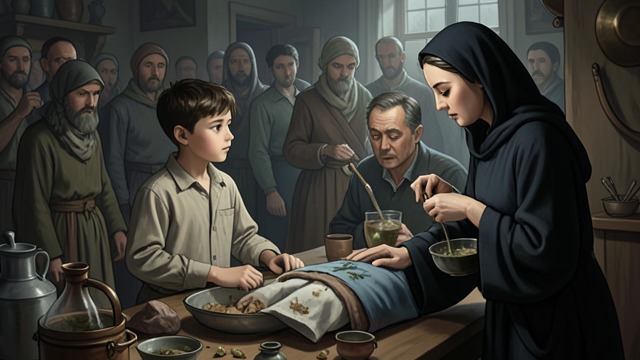
Healing Within a Supernatural Order
Ritual as Practical Knowledge
Olga treats villagers with herbs, mixtures, incantations, and physical procedures. The boy assists her, gaining a place in her household and a sense that he can help people who are suffering.
Her practices combine observation with superstition. The boy learns to treat illness as something that can be confronted through ritual, even when he cannot understand the causes or judge the remedies.
Plague Beyond Control
When a deadly plague spreads, the boy follows Olga from house to house, staring at patients in an effort to drive out sickness. The disease kills despite their efforts, and Olga eventually buries him up to his neck in cold earth to cool his fever.
He survives, but the episode does not prove that the supernatural account is true. It shows instead how people use inherited explanations and desperate treatments when they have little control over disease and death.
A Prayer Economy
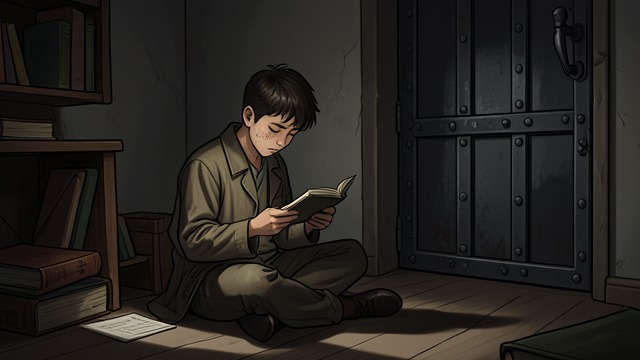
Faith as a System to Master
Counting Future Relief
After learning that prayers can earn days of indulgence, the boy imagines a heavenly storehouse where those days accumulate. He memorizes prayers with the greatest promised reward and recites them relentlessly while Garbos abuses him.
The system gives him a measure of agency. If suffering follows a rule, he can try to master that rule and build a future in which the beatings end.
The Cost of Failed Expectations
The boy’s faith is practical and desperate rather than abstract: he prays because he believes that the accumulated days will bring justice into his life. Yet Garbos continues to beat and hang him, and even the priest’s illness unsettles his assumptions about divine protection.
The boy’s imagined account of indulgences cannot change his immediate circumstances. Prayer becomes a way to endure, but it also leaves him waiting for help that does not arrive when he needs it.
The Altar and the Pit
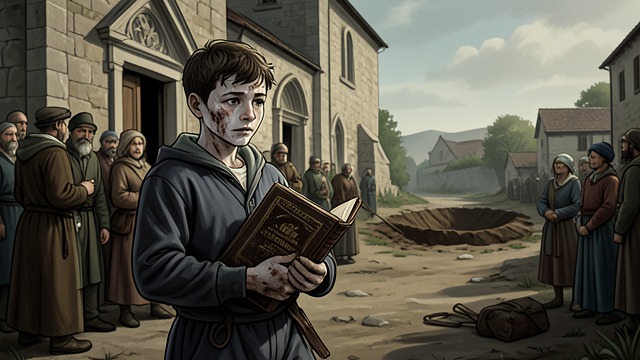
A Sacred Promise Reversed
Admission to the Altar
The boy believes that his many prayers have been noticed when he is unexpectedly asked to serve at Mass. He imagines a safer life beginning at the altar, under the protection of the priest and the church.
His mistake while carrying the Missal becomes the occasion for the congregation to call him a vampire. Rather than receiving sanctuary, he is dragged outside and thrown into a manure pit.
Faith Shaken by Experience
The boy survives the drowning attempt but loses his voice. The event joins religious ritual to humiliation, turning a hoped-for moment of acceptance into a bodily and spiritual crisis.
He begins to doubt that God or the saints govern his fate. The failure is not merely theological: the institution that seemed to offer protection has allowed a crowd to punish him as an outsider.
A New Explanation of the World
From Providence to Ideology
Gavrila’s Secular Lesson
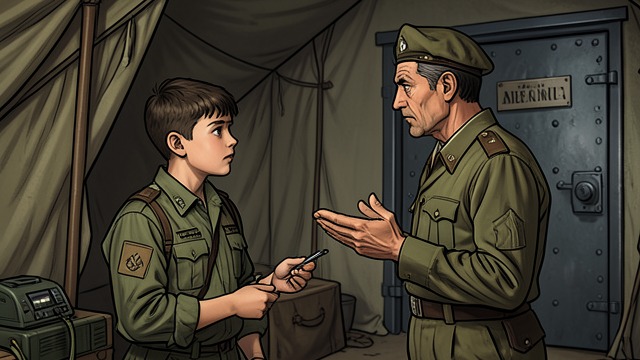
In the Red Army camp, Political instructor Gavrila teaches the boy that God does not exist and that people, rather than divine powers, shape their own lives. The explanation challenges the boy’s former reliance on prayer and supernatural causes.
Gavrila replaces divine order with a political account of collective action. The boy finds intellectual hope in the idea that organized people can improve the world and protect the vulnerable.
Faith Replaced, Not Settled
The boy wonders what became of his prayers and whether priests could truly believe in the faith they taught. His questions remain unresolved; the new doctrine gives him belonging and direction, but it is also presented through an authoritative system with its own rules and judgments.
The contrast between village superstition and Soviet certainty deepens the novel’s inquiry into how people explain suffering. Neither explanation can erase what the boy has endured, and neither removes his need to decide whom he can trust.
During the boy’s first weeks in the village
In the winter and spring of the boy’s stay with Olga
During the boy’s months with Garbos, before Corpus Christi
On Corpus Christi, after the boy hopes to serve at Mass
In autumn 1944, after the boy joins the Red Army regiment
